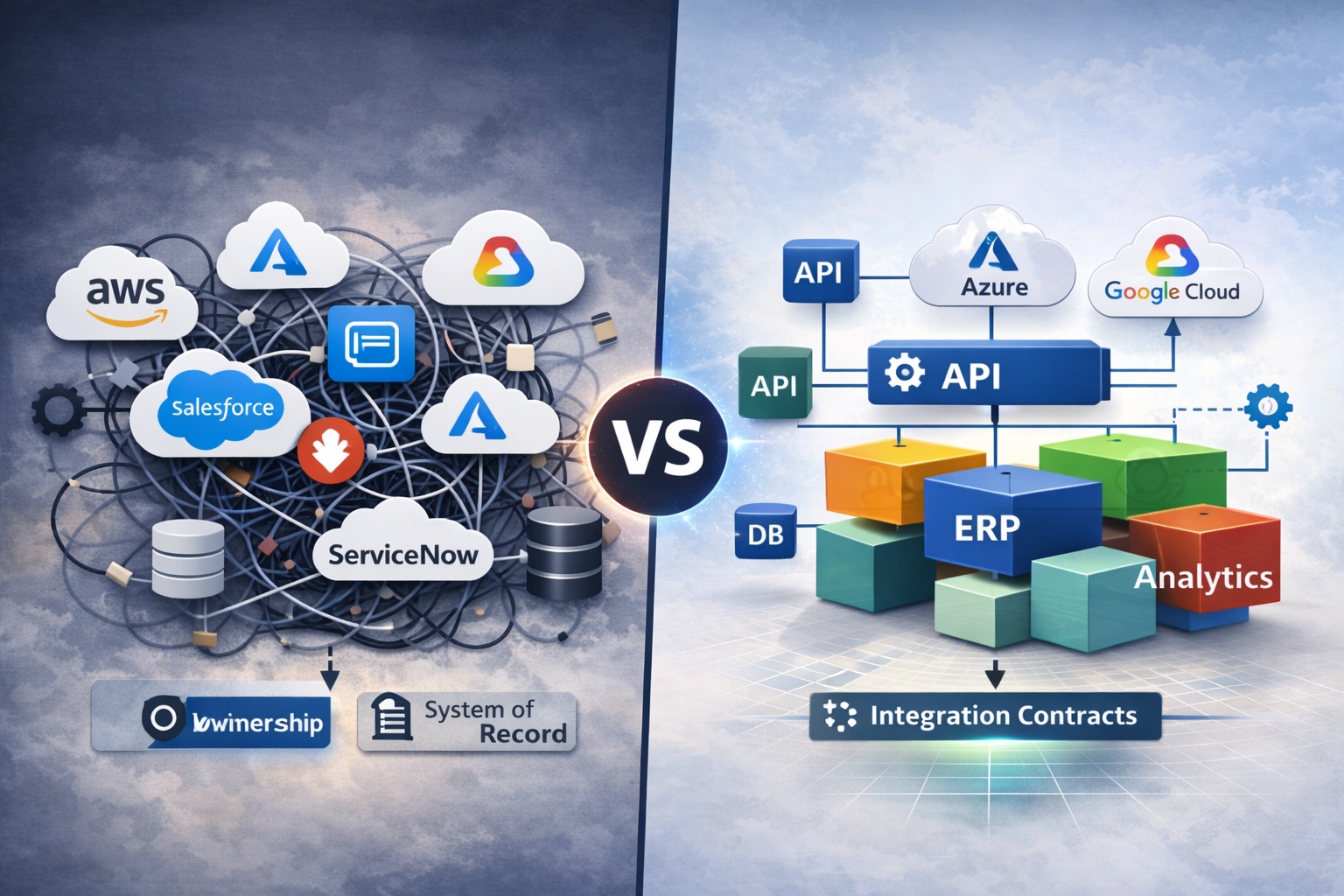
Why Multi-Cloud Is Not the Same as Strategic Optionality
Multi-cloud strategies are frequently positioned as a structural response to vendor lock-in. The underlying assumption is straightforward: if workloads are distributed across multiple providers, dependency risk is reduced. Diversification appears to increase resilience.1 Yet diversification is not equivalent to substitutability. Optionality is not defined by how many providers appear on an architectural diagram — it is defined by whether a capability can be replaced without systemic redesign. Distributing workloads may reduce concentration risk, but it does not automatically dissolve structural entanglement, especially where integration layers and proprietary service dependencies are concerned. Research into cloud vendor lock-in shows that interoperability and portability challenges remain core structural inhibitors to change.2 ...