
Dependency Is Inevitable - Irreversibility Is Not

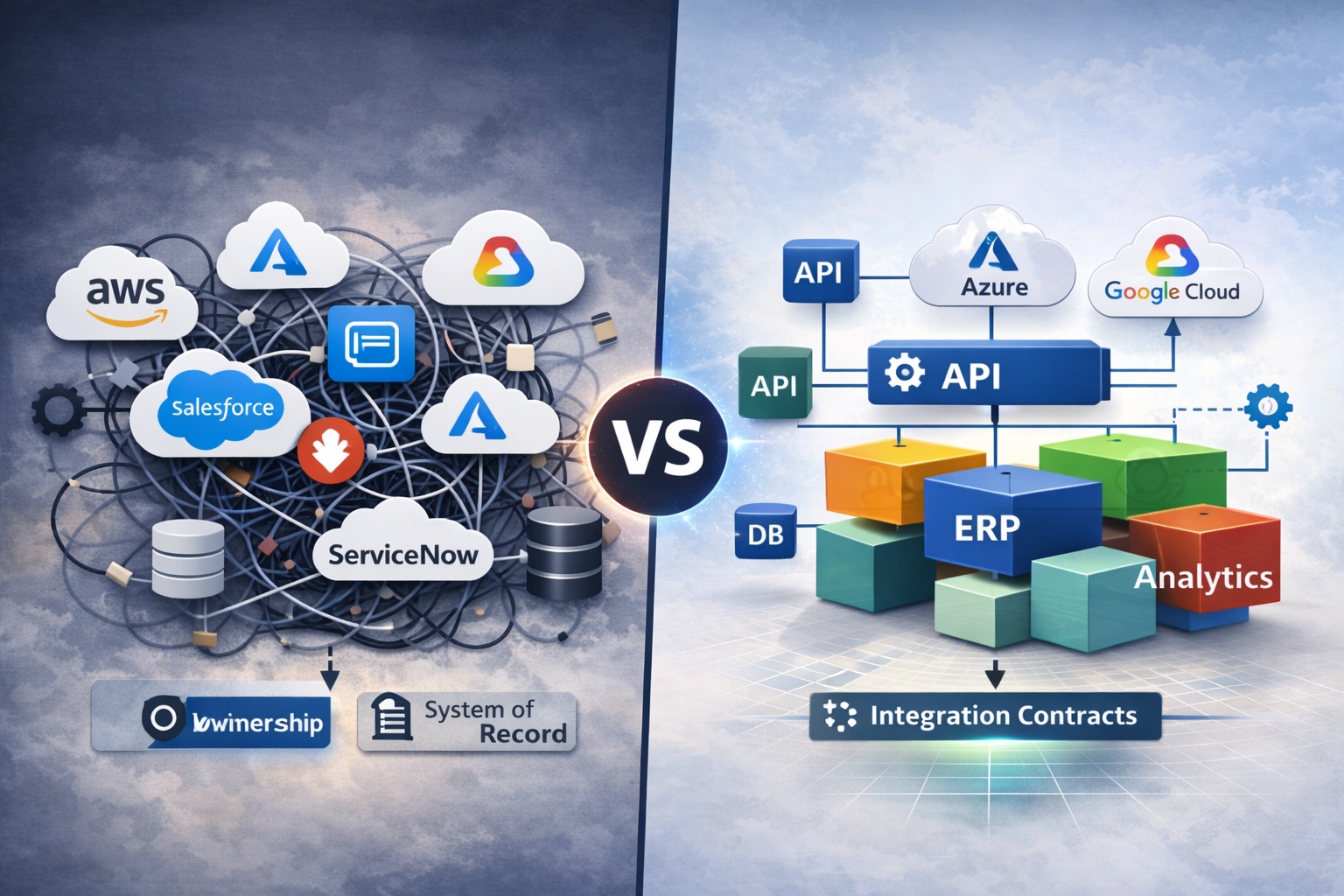
In Why the Management of Vendor Lock-in Is Strategically Relevant Again, we argued that vendor dependency has returned as a strategic concern. In Why Multi-Cloud Is Not the Same as Strategic Optionality, we clarified that diversification alone does not create real substitutability. The remaining question is structural: If optionality matters, can our architecture survive a vendor replacement? Vendor dependency is not primarily a technical issue. It is a capital allocation and risk exposure decision implemented through architecture. ...

February 25, 2026 · 4 min · 716 words · Bastian Seiffert

Why Multi-Cloud Is Not the Same as Strategic Optionality

Multi-cloud strategies are frequently positioned as a structural response to vendor lock-in. The underlying assumption is straightforward: if workloads are distributed across multiple providers, dependency risk is reduced. Diversification appears to increase resilience.1 Yet diversification is not equivalent to substitutability. Optionality is not defined by how many providers appear on an architectural diagram — it is defined by whether a capability can be replaced without systemic redesign. Distributing workloads may reduce concentration risk, but it does not automatically dissolve structural entanglement, especially where integration layers and proprietary service dependencies are concerned. Research into cloud vendor lock-in shows that interoperability and portability challenges remain core structural inhibitors to change.2 ...

February 24, 2026 · 5 min · 917 words · Bastian Seiffert

Why the Management of Vendor Lock-in Is Strategically Relevant Again

The issue of vendor lock-in has never disappeared. It has merely been evaluated differently. For years, vendor lock-in was primarily treated as a cost and migration question: How expensive would a switch be? How complex would a re-platforming initiative become? Today, the question is more fundamental. Vendor lock-in increasingly intersects with regulatory fragmentation, geopolitical tensions, and extraterritorial legal frameworks. The risk is no longer purely technical or financial. It is structural. ...

February 22, 2026 · 4 min · 646 words · Bastian Seiffert